
The US domestic freight market is undergoing a rapid transformation as we move into the spring of 2026. Recent data indicates that national trucking capacity is tightening at a pace not seen in years, driven by a combination of resurgent industrial demand and significant shifts in port activity. For international shippers and procurement teams, understanding these domestic fluctuations is critical for maintaining supply chain stability and managing landed costs effectively.
Key Takeaways for Logistics Managers
- Record Rate Surges: National dry van spot rates have hit a new cycle high of $2.89 per mile, reflecting a sharp $0.12 increase in just one week.
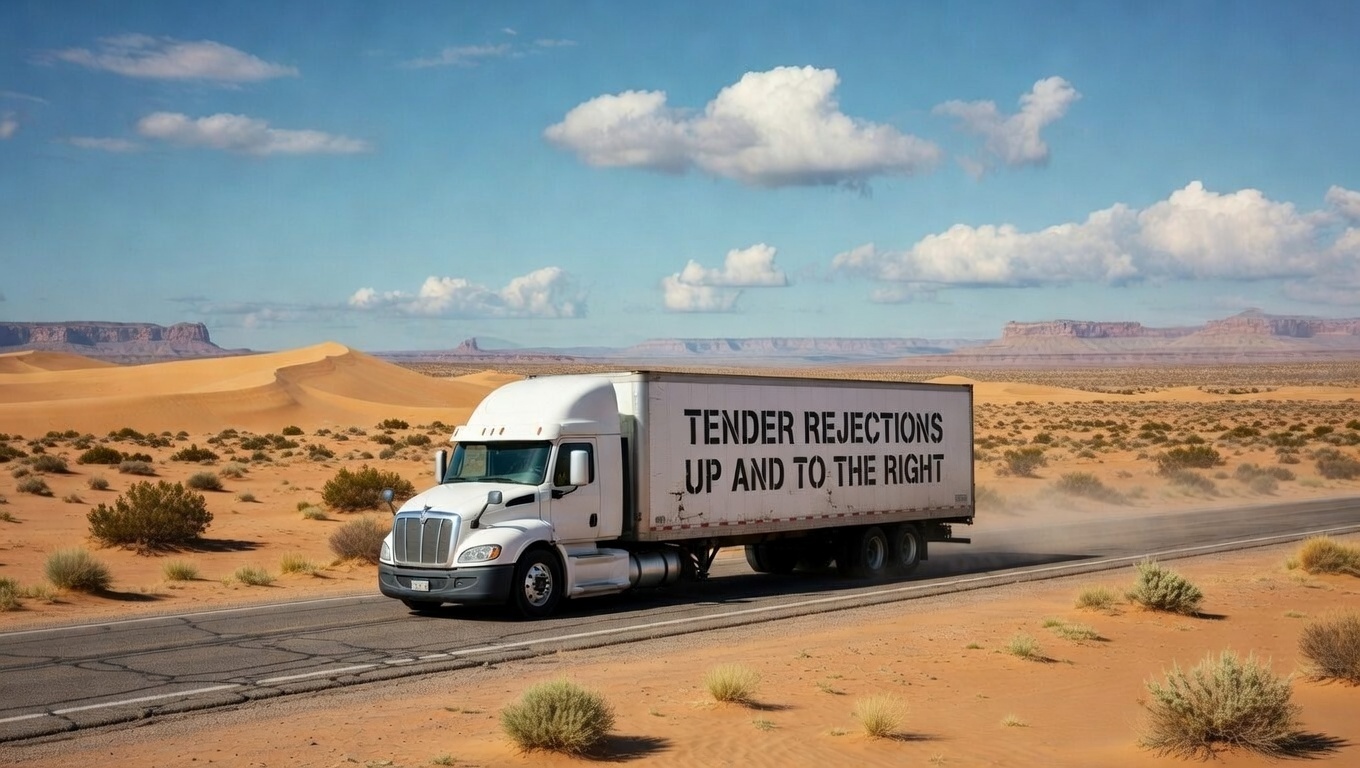
- Capacity Constraints: Multi-year carrier attrition and driver regulations have left the market highly sensitive to demand spikes, with national tender rejection rates climbing to 13-14%.
- The West Coast Magnet: A delayed post-Chinese New Year import surge is drawing long-haul capacity toward Southern California, leaving interior markets like the Midwest even tighter.
- Industrial Resilience: Strong manufacturing signals and flatbed activity are providing a solid floor for freight volumes, preventing the typical seasonal lulls.
The Rapid Ascent of US Trucking Capacity Costs
The freight market momentum is building at a rapid clip, signaling a definitive shift in pricing power toward carriers. National dry van spot rates, tracked via the SONAR National Truckload Index (NTI.USA), have recently broken out to a new cycle high of $2.89 per mile. This figure, which includes fuel surcharges, represents the strongest pricing level observed since 2022. The speed of this recovery is particularly notable; rates jumped by $0.12 per mile in the past week alone, underscoring how quickly US trucking capacity is being absorbed by the market.
Over the recent months, spot rates have recaptured approximately $0.50 to $0.60 per mile net of fuel. This climb from the low $2.00s—a range that defined much of the 2023–2024 period—represents a 20% to 25% year-over-year recovery in key lanes. With volumes holding at multi-year highs reminiscent of late 2022, the market is no longer just showing signs of life; it is entering a phase of sustained tightness that requires immediate attention from trade managers and supply chain planners.
Analyzing the Drivers: Industrial Demand and Carrier Attrition
This tightening is not merely seasonal noise; it is driven by fundamental shifts in the US economy. The return of industrial demand serves as the core engine for this growth. Stronger manufacturing signals and robust flatbed activity indicate that heavy industry is once again putting pressure on a shrunken truckload supply. Years of carrier attrition—caused by company exits, stricter driver regulations, and structural challenges—have left the industry with thin capacity. Consequently, the market is now highly responsive to even minor pickups in demand.
National tender rejection rates, a key indicator of how easily shippers can find trucks at contract rates, are sitting stubbornly in the low-to-mid teens, specifically around 13% to 14%. In the Midwest, these rates have climbed even higher, exceeding 18%. As rejection rates rise, shippers are forced into the spot market, further driving up the dry van spot rates and testing the resilience of existing routing guides. With our expertise in international freight forwarding, M.T.L Worldwide Transport closely monitors these US domestic market shifts to provide proactive routing advice for transpacific shipments.
The “West Coast Magnet” and the Post-CNY Surge
A unique factor in the 2026 market is the timing of the Chinese New Year (CNY), which landed on February 17. This later date prolonged the typical post-CNY slowdown, keeping Southern California capacity unusually loose into early March, with outbound rejections below 5%. However, the rebound is now hitting with significant force. Inbound containers are surging at West Coast ports, creating a powerful “magnet” for trucking capacity.
Long-haul carriers are increasingly chasing West-to-East port loads due to their superior length of haul, often ranging from 1,500 to over 2,000 miles per move. This is far more attractive to carriers than shorter eastern runs that require multiple loads to achieve equivalent paid miles. As trucks reposition westward from Midwest and Southeast corridors (moving along I-35 and parallels) to capture higher-paying outbound freight via I-20 and I-40, interior markets are facing intensified pressure. Shippers should expect even tighter conditions in the East as capacity reallocates toward the West Coast.
Strategic Implications for International Shippers
The convergence of industrial demand, seasonal peaks, and the delayed import surge means that Spring 2026 is igniting hotter and earlier than in previous years. Shippers who are unprepared for higher costs are already under immediate strain. Routing guides are being tested early in the season, and the speed at which tightness is spreading from the West Coast to the rest of the country will determine how sustained this impact becomes.
To navigate this environment, procurement teams must move beyond “nice to know” data and take concrete actions. Monitoring outbound rejections and spot rates from Southern California over the next two to four weeks is essential. Furthermore, tracking Midwest and Southeast trends will provide a roadmap for where capacity will disappear next. In a market where freight market trends can shift by $0.12 in a single week, agility and early booking are the only ways to mitigate the risk of significant budget overruns and delivery delays.
Conclusion
The $2.89 cycle high in spot rates is a clear signal that the US trucking market has shifted. With industrial demand firing on all cylinders and the West Coast import surge draining capacity from the interior, the spring shipping season is set to be one of the most challenging in recent memory. By understanding these dynamics—from carrier attrition to the “magnet” effect of long-haul port loads—logistics professionals can better position their organizations to handle the heat of the 2026 shipping season.
Frequently Asked Questions
Why are US trucking spot rates increasing so rapidly in 2026?
Rates have surged to $2.89 per mile due to a combination of resurgent industrial demand, significant carrier attrition over the past two years, and a delayed surge in imports following the February 17 Chinese New Year.
How does the ‘West Coast Magnet’ effect impact shipping in the Midwest?
As inbound container volumes surge at West Coast ports, long-haul carriers shift their trucks toward Southern California to secure high-paying, 1,500+ mile loads. This drains capacity from the Midwest and Southeast, leading to higher tender rejection rates in those regions.
What are current tender rejection rates in the US truckload market?
National tender rejection rates are currently between 13% and 14%, with the Midwest leading at over 18%. These levels indicate that carriers are frequently turning down contract loads in favor of higher-paying spot market opportunities.
How did the 2026 Chinese New Year affect US freight capacity?
Because Chinese New Year occurred later (February 17), the typical post-holiday import surge was delayed until March. This has created a synchronized tightening of capacity as the import rebound coincides with the start of the spring industrial and seasonal shipping peaks.