
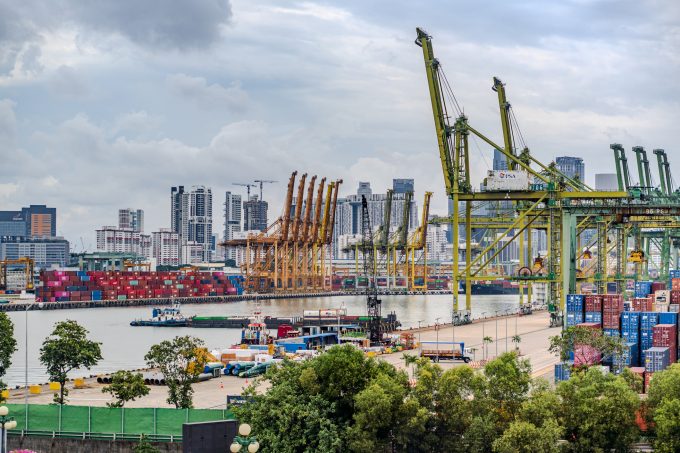
The international shipping landscape is currently facing a significant shift as intra-Asia freight rates continue to climb. Driven by a combination of early peak season demand and persistent port congestion, businesses operating within the region must adapt to rapidly changing market conditions to maintain supply chain efficiency.
Key Takeaways for Shippers
- Significant Rate Hikes: Shanghai-Southeast Asia rates have surged by nearly 50% year-on-year, reaching $682 per TEU.
- Critical Congestion: Major transhipment hubs, particularly Singapore, are experiencing “sticky” congestion that disrupts container flows.
- Equipment Shortages: A slow return of empty containers is limiting the availability of equipment in South Asian markets.
- Early Peak Season: Cargo owners are pulling forward Christmas shipments to avoid potential year-end disruptions, further straining capacity.
Rising Intra-Asia Freight Rates and Market Trends
According to recent data from the Shanghai Containerised Freight Index (SCFI) dated June 12, the freight rate from Shanghai to Southeast Asia rose by 5% in just one week. This brings the rate to $682 per TEU, a staggering increase compared to the same period last year. This upward trend is mirrored in other major lanes; Drewry’s Intra-Asia Container Index reported that Shanghai-Singapore rates averaged $1,094 per FEU (excluding terminal handling charges), up from $922 in late May.
These figures highlight a volatile market where capacity is tight and demand remains high. For procurement teams and trade managers, these rising costs must be factored into landed cost calculations immediately to avoid budget overruns in the second half of the year.
Impact of Port Congestion and Equipment Shortages
The primary driver behind these rate increases is the persistent congestion at major transhipment hubs. Singapore, a vital node for regional trade, is seeing critical levels of port utilization. Large volumes of displaced containers have disrupted standard network flows, making it difficult for carriers to maintain reliable schedules.
This congestion has a secondary effect: the disruption of empty container repositioning. When vessels are delayed at congested ports, the return of empty equipment to manufacturing hubs in South Asia is slowed. This creates a localized shortage of containers, forcing shippers to compete for limited equipment and driving spot rates even higher. With our expertise in the regional market, M.T.L Worldwide Transport monitors these shifting port dynamics to help clients navigate equipment shortages and rising costs.
The Role of Major Transhipment Hubs
As hubs like Singapore and other major Asian ports struggle with volume, the ripple effects are felt across the entire Intra-Asia network. When a major hub is blocked, carriers often skip calls or divert cargo, leading to longer transit times and increased uncertainty for supply chain planners. Shippers using these routes should prepare for “sticky” delays that may not resolve in the immediate future.
Early Peak Season and Christmas Cargo Planning
In a surprising move, many cargo owners are already bringing forward shipments of Christmas goods and seasonal inventory. This early peak season is largely motivated by concerns over rising costs and the fear of further supply chain disruptions later in the year. This has led to an increased volume of semi-finished goods and components being transported across Asia, particularly between China and Southeast Asia.
This surge in early volume is consuming available vessel capacity that would typically be available for standard trade. For e-commerce sellers and retailers, this means the traditional “peak season” has effectively started months earlier than usual, requiring a total reassessment of inventory timing and booking strategies.
Future Outlook: Geopolitical Factors and Capacity
While the current outlook remains challenging, there are potential developments on the horizon. Discussions regarding a memorandum of understanding between the US and Iran could potentially release over 50 vessels currently stranded in the Persian Gulf, adding approximately 300,000 TEU of capacity back into the global market. Furthermore, any move toward peace in the Middle East could see operators resuming transits through the Red Sea.
However, analysts like Peter Sand from Xeneta suggest it is still too early to determine if these factors will provide immediate relief. For now, the focus remains on managing the immediate impacts of congestion and high demand. Shippers are advised to book cargo earlier than usual and maintain flexible routing options to bypass the most congested hubs.
Frequently Asked Questions
Why are intra-Asia freight rates increasing so rapidly?
Rates are rising due to a combination of ‘sticky’ port congestion at hubs like Singapore, a shortage of empty container equipment, and an early peak season where shippers are moving Christmas goods months ahead of schedule.
How much have Shanghai to Southeast Asia shipping rates increased?
As of mid-June, rates reached $682 per TEU, representing a 5% weekly increase and a nearly 50% increase compared to the previous year.
What is the current status of port congestion in Singapore?
Port utilization at Singapore remains at critical levels. This congestion is disrupting container flows and making it difficult to reposition empty equipment back into South Asian markets.
Should I book my international shipments earlier this year?
Yes, logistics experts recommend booking cargo earlier due to capacity shortages and congestion. Many businesses are already shipping year-end holiday goods to avoid further rate hikes and delays.